
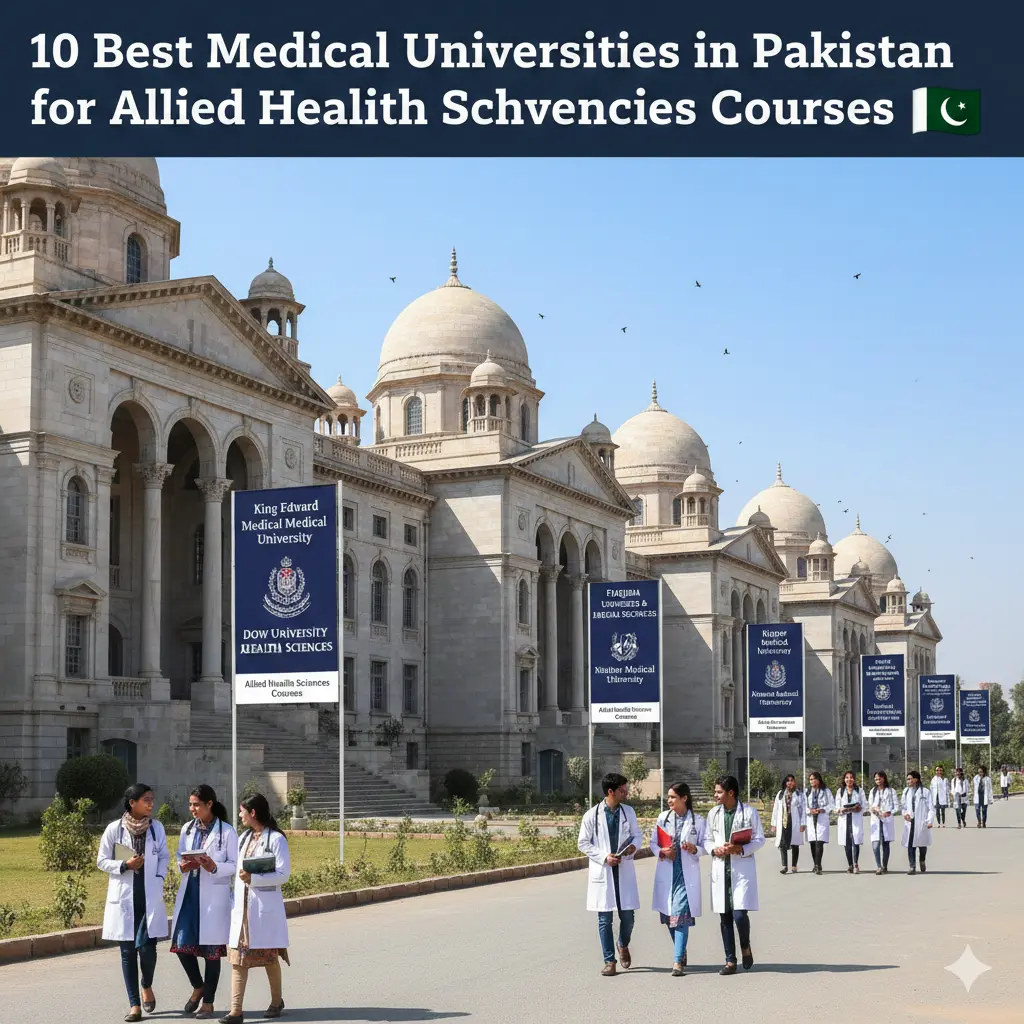
Introduction
When it comes to healthcare, doctors and nurses often steal the spotlight. But there’s an entire army of highly skilled professionals quietly keeping the system running—Allied Health Sciences experts. From radiology technicians diagnosing diseases to physiotherapists helping patients recover movement, these careers are vital.
If you’re considering a future in Allied Health Sciences in Pakistan, you’ve come to the right place. In this article, we’re diving deep into the 10 best medical universities in Pakistan for Allied Health Sciences courses, highlighting what makes them stand out, what programs they offer, and how they set students up for success.
What is Allied Health Sciences?
Allied Health Sciences is a broad sector of healthcare that includes a variety of specialized fields such as medical laboratory technology, radiology, physiotherapy, occupational therapy, respiratory therapy, nutrition and dietetics, anesthesia technology, and more.
Unlike MBBS or nursing, Allied Health focuses on diagnostic, therapeutic, and technical services that enable patient care behind the scenes. These professions are critical—without them hospitals wouldn’t function efficiently.
Importance of Allied Health Sciences in Pakistan
Pakistan’s healthcare needs are growing rapidly. With rising population and chronic diseases on the rise, the demand for skilled Allied Health professionals has never been higher. These experts fill gaps in patient care, reduce hospital workloads, and provide specialized services that improve health outcomes.
Why Choose Allied Health Sciences as a Career?
Choosing Allied Health Sciences can be a smart move if you want:
- Stable career with high demand
- Diverse job opportunities
- Good earning potential
- Possibilities to work abroad
If you love science, enjoy hands-on work, and want to contribute directly to patient care, this field might be your perfect fit.
How to Choose the Best University for Allied Health Sciences
There are several factors to consider when selecting a university for Allied Health Sciences.
Accreditation and Recognition
Make sure the university is recognized by the Pakistan Medical Commission (PMC) and the Higher Education Commission (HEC). Accreditation ensures that your degree is valid and industry-recognized.
Faculty and Facilities
Experienced teachers and modern labs make all the difference. Look for universities with updated equipment and strong faculty credentials.
Internship and Job Placement
Practical training is essential in Allied Health Sciences. Choose universities with strong hospital affiliations and internship placements.
Research Opportunities
Universities that promote research give you an edge, especially if you plan to pursue higher studies.
1. Aga Khan University (AKU), Karachi
Overview
Aga Khan University is one of Pakistan’s most respected medical institutions. Known for excellence in healthcare education, AKU offers top-tier Allied Health Sciences programs.
Allied Health Programs Offered
- Medical Laboratory Technology
- Radiologic Technology
- Occupational Therapy
- Physiotherapy
Key Features
- State-of-the-art labs
- International collaborations
- Strong internship placements
- Excellent faculty support
AKU’s reputation and holistic approach make it a dream choice for many students.
2. Allama Iqbal Medical College (AIMC), Lahore
Overview
AIMC, affiliated with the University of Health Sciences (UHS), Lahore, is one of the most reputed medical colleges with robust Allied Health departments.
Allied Health Programs Offered
- Medical Laboratory Technology
- Dental Technology
- Anesthesia Technology
Key Features
- Affordable fees
- Good hospital exposure
- Experienced teaching staff
AIMC stands out for its balance of quality education and real-world experience.
3. King Edward Medical University (KEMU), Lahore
Overview
KEMU is one of Pakistan’s oldest and most prestigious medical universities. Its Allied Health programs enjoy strong recognition nationwide.
Allied Health Programs Offered
- Physiotherapy
- Medical Imaging Technology
- Cytotechnology
Key Features
- Rich academic history
- Strong clinical rotation programs
- High passing rates
KEMU combines tradition with modern healthcare training.
4. Dow University of Health Sciences (DUHS), Karachi
Overview
DUHS is a major hub of health education in southern Pakistan. Its Allied Health departments are equipped with modern facilities and clinical exposure.
Allied Health Programs Offered
- Occupational Therapy
- Medical Laboratory Technology
- Respiratory Therapy
Key Features
- Large teaching hospital
- Frequent workshops and seminars
- Progressive curriculum
DUHS prepares graduates well for both local and international opportunities.
5. Shifa Tameer-e-Millat University (STMU), Islamabad
Overview
STMU is known for its modern approach to health sciences education and a focus on practical skill-building.
Allied Health Programs Offered
- Medical Laboratory Technology
- Radiologic Technology
- Physiotherapy
Key Features
- Strong industry links
- Internship placements
- Continuous learning culture
STMU is rapidly gaining popularity among Allied Health aspirants.
6. University of Health Sciences (UHS), Lahore
Overview
UHS is the regulatory authority for medical education in Punjab and offers excellent Allied Health programs through affiliated colleges.
Allied Health Programs Offered
- Medical Laboratory Science
- Diagnostic Imaging
- Cardiac Technology
Key Features
- Standardized curriculum
- Strong exam system
- Affordable options
UHS degrees are widely recognized across Pakistan.
7. Khyber Medical University (KMU), Peshawar
Overview
KMU is the main medical university in Khyber Pakhtunkhwa and emphasizes Allied Health Sciences with quality education and practical learning.
Allied Health Programs Offered
- Physiotherapy
- Medical Imaging
- Clinical Lab Sciences
Key Features
- Experienced faculty
- Regional healthcare exposure
- Affordable tuition
KMU serves students across the northwest region with solid training and support.
8. Faisalabad Medical University (FMU), Faisalabad
Overview
Located in a key healthcare city, FMU offers strong allied health programs supported by teaching hospitals.
Allied Health Programs Offered
- Medical Laboratory Technology
- Diagnostic Imaging
- OT Technology
Key Features
- Hands-on clinical rotations
- Supportive faculty
- Growing reputation
FMU is ideal for students seeking both learning and clinical exposure.
9. Bahria University Medical & Dental College (BUMDC), Karachi
Overview
BUMDC, part of Bahria University, offers quality education with military precision and discipline.
Allied Health Programs Offered
- Medical Laboratory Sciences
- Radiologic Technology
- Anesthesia Technology
Key Features
- Well-equipped labs
- Focused career guidance
- Excellent campus environment
BUMDC stands out for its structured and professional training approach.
10. Liaquat University of Medical & Health Sciences (LUMHS), Jamshoro
Overview
LUMHS is a pioneer in medical education in Sindh with Allied Health Science programs designed for future healthcare leaders.
Allied Health Programs Offered
- Medical Laboratory Technology
- Physiotherapy
- OT & Imaging Programs
Key Features
- Strong clinical exposure
- Affordable education
- Dedicated faculty
LUMHS combines tradition with evolving healthcare education.
Benefits of Studying Allied Health Sciences in Pakistan
High Demand in Healthcare Sector
Healthcare systems today rely heavily on Allied Health professionals. Graduates often find jobs quickly after completing their programs.
Diverse Career Paths
From diagnostic labs to rehabilitation centers, opportunities are vast and varied.
Opportunities for Higher Education Abroad
Many Allied Health degrees from Pakistan are recognized internationally, opening doors for global careers.
Challenges in Allied Health Education

Limited Awareness
Despite high demand, many students are unaware of Allied Health career options.
Need for Updated Curriculum
To keep pace with global standards, continuous curriculum updates are essential.
Conclusion
Choosing the best university for Allied Health Sciences in Pakistan can shape your career in meaningful ways. From Aga Khan University’s elite training to UHS’s standardized programs and KMU’s regional impact, there’s a fit for every student’s needs.
Allied Health professions are not just careers—they’re lifelines to healthcare systems. With the right education, passion, and dedication, you can become part of a community that changes lives every day.
FAQs
Q1: What is the duration of Allied Health Sciences programs in Pakistan?
Most programs range from 2 to 4 years depending on the specialization.
Q2: Are Allied Health degrees recognized internationally?
Yes, degrees from accredited Pakistani universities are recognized abroad, especially in the Middle East and Europe.
Q3: Is there job demand for Allied Health graduates in Pakistan?
Absolutely! The demand is rapidly increasing as healthcare services expand.
Q4: Can Allied Health graduates work in public hospitals?
Yes, many graduates find positions in both public and private hospitals.
Q5: Do these universities offer internships?
Yes, most provide internships and clinical rotations as part of the curriculum.