
Introduction
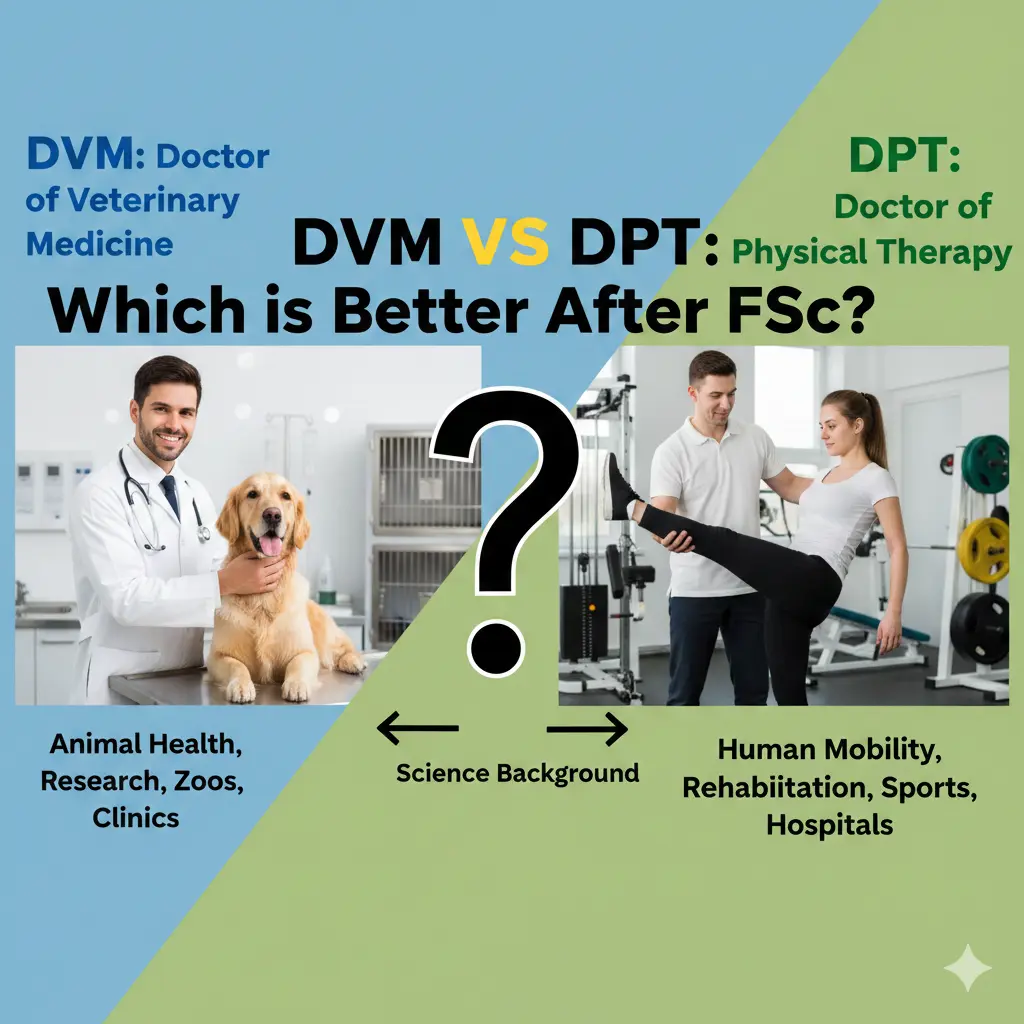
After completing FSc, students are often at a crossroads when it comes to choosing their professional path. Two popular yet very different options are DVM (Doctor of Veterinary Medicine) and DPT (Doctor of Physical Therapy). Both careers promise growth and stability, but the question remains: which one is better? If you’re someone who is torn between DVM VS DPT, this guide will walk you through everything you need to know — from career opportunities to work environment and personal interests.
What is DVM?
DVM stands for Doctor of Veterinary Medicine. This degree focuses on the health and medical treatment of animals. DVM graduates are trained to diagnose, treat, and prevent diseases in animals, ranging from pets to livestock.
Career Opportunities for DVM Graduates
DVM opens doors to a variety of roles, including:
- Veterinarian in private or government clinics
- Livestock and poultry consultant
- Research scientist in veterinary medicine
- Wildlife conservationist
Typical Duration and Curriculum
A DVM program usually lasts 5 years, covering courses like:
- Anatomy and Physiology of animals
- Veterinary Surgery and Medicine
- Animal Nutrition
- Disease Control and Epidemiology
What is DPT?
DPT stands for Doctor of Physical Therapy. This degree is all about helping humans recover from injuries, improve mobility, and manage chronic pain. DPT graduates are experts in rehabilitation techniques and preventive care.
Career Opportunities for DPT Graduates
A DPT opens career paths such as:
- Clinical physiotherapist in hospitals or private clinics
- Sports physiotherapist for athletes
- Rehabilitation specialist
- Researcher in physical therapy sciences
Typical Duration and Curriculum
The DPT program generally takes 4 to 5 years, with courses including:
- Human Anatomy and Physiology
- Exercise Therapy
- Manual Therapy Techniques
- Neurological and Musculoskeletal Rehabilitation
DVM VS DPT: A Quick Comparison Table
| Feature | DVM | DPT |
|---|---|---|
| Focus Area | Animal health | Human rehabilitation |
| Typical Duration | 5 years | 4-5 years |
| Career Options | Vet, researcher, consultant | Physiotherapist, sports therapist |
| Work Environment | Clinics, labs, farms | Hospitals, rehab centers, gyms |
| Salary Range | Moderate to high | Moderate to high |
| Entrance Requirement | FSc Pre-Med (Biology, Chemistry) | FSc Pre-Med (Biology, Chemistry) |
| Higher Studies Options | MS, PhD, specialization | MS, PhD, specialization |
| Skill Set Required | Analytical, technical | Manual therapy, communication |
| Job Market Demand | High in agriculture & pets | Growing globally |
| Personal Interest Needed | Love for animals | Passion for helping humans |
1. Field of Study
The most obvious difference between DVM and DPT is the field of study. DVM deals entirely with animals, their health, and disease management. If you’ve ever dreamed of being a vet, taking care of pets, livestock, or even wild animals, DVM is your calling.
On the other hand, DPT focuses on human health, particularly physical rehabilitation. If you like helping people regain mobility or manage chronic pain, DPT may be more satisfying.
2. Career Opportunities
Career paths in DVM include running veterinary clinics, consulting for livestock farms, working in animal research, or even joining wildlife conservation projects.
DPT graduates, however, can work in hospitals, private clinics, sports academies, or rehabilitation centers. Sports physiotherapy is particularly lucrative for those interested in athletic care.
3. Duration of Study
While both programs are intensive, DVM usually takes about 5 years to complete, including internships. DPT can take 4-5 years, depending on the country and program structure.
4. Salary Prospects
Both careers offer good earning potential, but they vary depending on location and specialization:
- DVM: Entry-level veterinarians earn moderately, but experienced vets or specialists in exotic/wildlife animals can earn significantly more.
- DPT: Physiotherapists generally have a steady income, with private practice and sports therapy offering higher earnings.
5. Admission Requirements
For both DVM and DPT, FSc Pre-Med (Biology, Chemistry, Physics) is usually required. Some universities may also require an entrance test, such as the ETEA or MDCAT for DVM, or local university tests for DPT programs.
6. Scope for Higher Studies
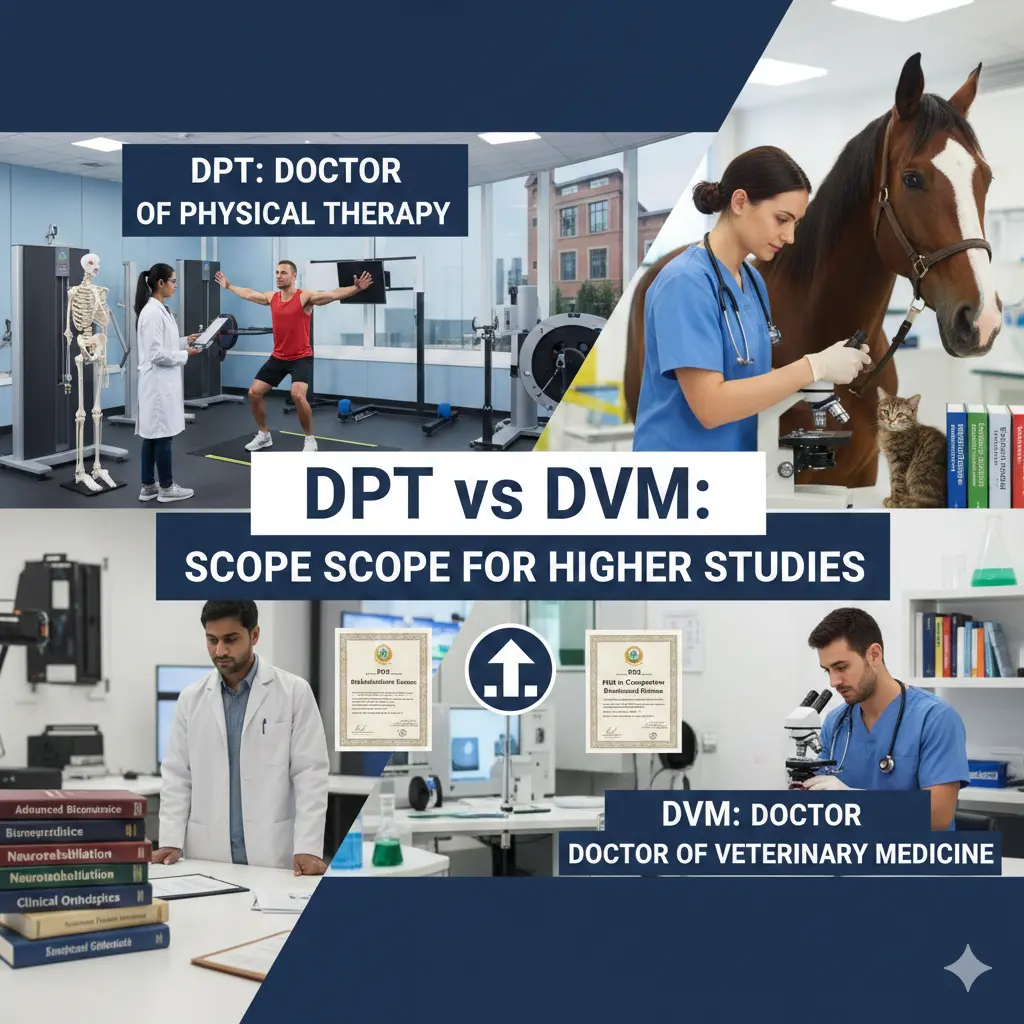
DVM graduates can pursue:
- MS or PhD in Veterinary Science
- Specializations in surgery, pathology, or animal nutrition
DPT graduates can pursue:
- MSc or PhD in Physical Therapy
- Specializations in neurology, pediatrics, or sports therapy
Higher studies can boost career prospects and earning potential significantly in both fields.
7. Job Market Demand
Globally, veterinarians are in high demand, especially with increasing awareness of pet healthcare and livestock management.
Physiotherapists also have a growing job market, fueled by aging populations, sports rehabilitation, and preventive healthcare.
8. Work Environment
DVM graduates can work in:
- Veterinary hospitals
- Farms and livestock industries
- Research laboratories
- Wildlife conservation areas
DPT graduates typically work in:
- Hospitals and rehab centers
- Sports clubs or fitness centers
- Private clinics
- Home care services
9. Skills Required
For DVM, essential skills include analytical thinking, attention to detail, technical knowledge of animal anatomy, and patience.
For DPT, crucial skills include manual therapy, communication, empathy, and problem-solving to create personalized rehabilitation plans.
10. Personal Interests and Passion
Choosing between DVM and DPT largely depends on your personal interest:
- Do you enjoy working with animals and understanding veterinary science? Then DVM is ideal.
- Do you love helping humans recover and improve quality of life? Then DPT is the way to go.
Passion often determines success and satisfaction more than any other factor.
Conclusion
Choosing between DVM VS DPT after FSc is a decision that depends on your interests, career goals, and willingness to commit to the field. DVM is perfect for animal lovers and those interested in veterinary medicine, while DPT suits individuals passionate about human health and rehabilitation. Both careers offer promising growth, good salaries, and the opportunity to make a meaningful impact.
FAQs
1. Can I switch from DVM to DPT later?
Switching is possible, but it requires starting a new degree in DPT since the subjects are entirely different.
2. Which degree has a shorter duration, DVM or DPT?
Typically, DPT is slightly shorter, around 4-5 years, whereas DVM is usually 5 years.
3. Are DVM and DPT recognized internationally?
Yes, but recognition varies by country. Both may require local licensing exams for practice abroad.
4. Which career has a higher initial salary?
It varies by location, but physiotherapy (DPT) often offers steady initial salaries, while veterinary salaries can vary based on type of practice.
5. Is DVM or DPT more demanding academically?
Both are demanding, but DVM often involves more practical animal handling, while DPT emphasizes manual skills and patient interaction.